

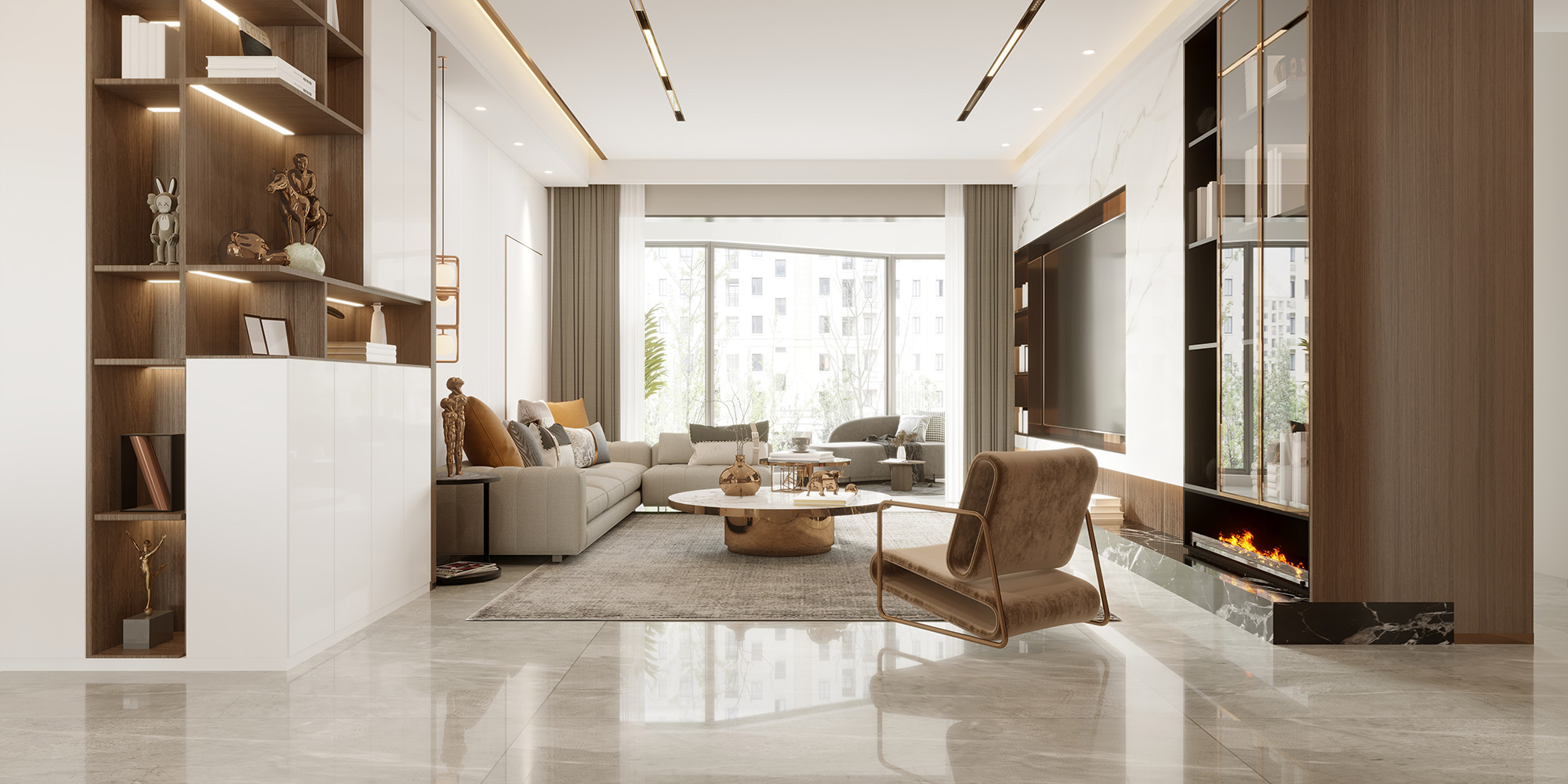
Tile flooring gives homeowners an enormous range of choices, from small decorative patterns to expansive slabs that create a clean, contemporary appearance. Among the decisions to make during a renovation is tile size. Large format tile has become an increasingly visible design option, while standard-sized tile remains a flexible choice for many rooms.
The best selection depends on your room dimensions, layout, design goals, installation requirements, and the visual effect you want to achieve. Comparing the advantages and limitations of each can help you plan a more successful project.
Why Large Format Tile Creates a Distinct Look
Large format tile uses larger individual pieces to create fewer visible grout lines across an installation. This can produce a streamlined appearance that works particularly well with contemporary and minimalist interiors. Fewer grout joints can also change how the room feels visually.
Continuous surfaces may make a space appear more open, although the actual effect depends on tile color, room dimensions, layout, lighting, and surrounding finishes. Large format tile can be especially effective when you want the flooring to become a quiet foundation for cabinets, furniture, or architectural details. Current tile flooring trends 2026 continue to include larger formats and clean, understated designs.
Where Standard Tile Has an Advantage
Standard tile remains popular because it offers flexibility in layout and design. Smaller formats can work well around room features, and a broader selection of shapes and patterns can make it easier to create decorative arrangements. Standard tile may also be easier to incorporate into spaces where many corners, transitions, or changes in direction make very large pieces less practical.
The appropriate size depends heavily on the room rather than following a one-size-fits-all design rule. For homeowners who want more visual detail, standard tile can provide opportunities for borders, patterns, contrasting grout, and other decorative treatments.
Installation Considerations for Larger Tiles
Tile installation becomes particularly important when working with large pieces. The installer needs to account for the condition and preparation of the surface, tile layout, handling, and the requirements of the specific product. Large pieces can also require careful planning around walls, cabinets, drains, doorways, and other permanent features.
A well-planned layout helps minimize awkward cuts and keeps the finished design balanced. Professional tile installation can help address these details before materials are permanently installed. This is one reason it is useful to discuss your room with a flooring professional before finalizing the tile size.
Match Tile Size to Your Room and Style
There is no universal answer to whether large format or standard tile is better. A spacious room with a clean architectural layout may suit the broad visual scale of large format tile. A smaller or more detailed space may benefit from the flexibility of standard formats. Homeowners in Kearney, MO can also consider how the flooring connects with nearby rooms and existing materials.
Taff's Carpets can help you compare tile sizes, patterns, finishes, and installation considerations based on your specific project. If you live in Liberty, Smithville, Excelsior Springs, Kearney, Kansas City MO, viewing actual samples can make the differences between tile formats much easier to understand.
Choose a Tile Layout That Works From the Start
Large format and standard tile can both produce beautiful, durable flooring when the material and layout suit the room. Think about scale, grout lines, room features, maintenance, and installation requirements before making your final selection. If you are ready to explore your options, contact us today and visit our showroom to compare tile flooring, discuss tile installation, and see how different sizes and designs could work in your home. A thoughtful tile plan can give your renovation a polished appearance that feels intentional from floor to ceiling.


